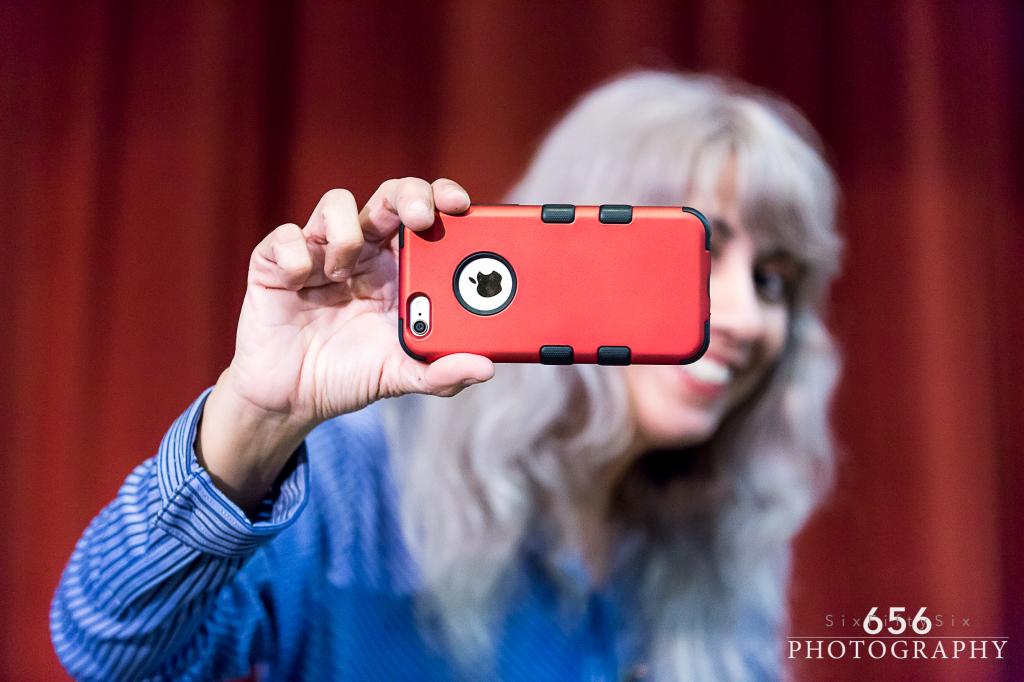
For decades, the "barrier to entry" in filmmaking was measured in thousands of dollars for equipment, expensive film stock, and a rigid "gatekeeper" system. S. Botello Productions (SBP), founded by Susy Botello in 2006, was built on the radical premise that the most powerful tool for storytelling was already in the palm of our hands: the mobile phone.
Operating primarily through its WordPress hub and associated platforms, S. Botello Productions has spent nearly two decades championing the idea that story is the heart of film, and the camera is simply the messenger. By focusing on smartphone filmmaking, the company has democratized cinema, allowing voices from diverse backgrounds, limited budgets, and remote locations to reach global screens.
The genesis of S. Botello Productions is rooted in a moment of profound global shift. Following the events of September 11, 2001, Susy Botello—then a student of Media Communications—had a vision of a future where people would connect and empower each other through personal, portable stories.
By 2006, she officially launched S. Botello Productions. In 2009, she did something truly ahead of its time: she launched the International Mobile Film Festival (IMFF) in San Diego. At that time, smartphone cameras were primitive; the iPhone 4 (often cited as the catalyst for the mobile film boom) wouldn't even be released until the following year. Botello saw the potential of the medium long before the industry "big players" caught on, establishing herself as a pioneer who didn't wait for the technology to catch up to her vision.
S. Botello Productions operates as a multi-media hub that educates, celebrates, and produces.
This is the company’s flagship project. Unlike traditional festivals that may have a "mobile category," IMFF is dedicated exclusively to films shot with mobile phones. It provides a "big screen" experience for these creators, legitimizing the smartphone as a professional cinema tool.
Launched in 2017, the podcast serves as the educational and community-building arm of the company. Susy Botello interviews filmmakers from around the globe—ranging from Hollywood veterans like Steven Soderbergh (who shot Unsane on iPhone) to hobbyists making their first short.
"Fade In To Film" (FITF): A series within the podcast that bridges the gap between traditional indie filmmaking and mobile techniques.
Global Reach: The podcast has become a "vocal archive" of the history of mobile cinema, documenting the transition from low-res flip phones to the 4K cinematic powerhouses of today.
This is a newer extension of the brand, acting as a dedicated space for smartphone storytellers to showcase their work without the distractions of traditional social media algorithms. It emphasizes quality and community over "viral" metrics.
While S. Botello Productions is a platform for others, Susy Botello and her company have been involved in producing and promoting specific short films that define the mobile aesthetic.
One of the most significant recent projects under the S. Botello Productions banner is the documentary series "A Story..." which focuses on the intersection of art, community, and technology. This series utilizes smartphone cameras to capture intimate, raw moments that a large camera crew might disrupt. It exemplifies the company’s philosophy: the best camera is the one that allows the subject to remain authentic.
Through the IMFF and the WordPress blog, SBP has been instrumental in the distribution and promotion of landmark short films like:
"The Other Side" (Conrad Mess): Mess is a frequent collaborator and a pioneer who showed that high-end noir and suspense could be achieved with a mobile phone.
"Ghost Leave" (Miguel Lopez de Leon): A recent festival favorite that blended humor and storytelling, proving the "cinematic" quality of mobile phones in narrative comedy.
"Threshold" (Patrick R. Young & Powell Robinson): While a feature, its journey was heavily documented by SBP, showcasing how a 12-day shoot with two iPhones could produce a professional-grade thriller.
A significant portion of the sbotelloproductions.wordpress.com content is dedicated to the "Mobile Film School" aspect. Susy Botello often argues against "gear lust." While she discusses tools like the Zacuto Smart Z-Finder or Micro Boom mics, her message is consistent:
"The only beginning and end to a story is the one that is told or the one we perceive."
The company teaches that mobile filmmaking isn't about "making it look like it was shot on a RED camera." It’s about leaning into the unique benefits of the smartphone:
Portability: Getting into tight spaces.
Intimacy: Subjects often feel less intimidated by a phone than a large lens.
Immediacy: The ability to edit and share almost instantly.
By providing a platform for films from Indonesia, Australia, Germany, and beyond, S. Botello Productions has created a "global neighborhood." The WordPress site serves as a historical record of how mobile filmmaking has evolved from a "gimmick" into a respected sub-genre of independent film.
The company’s "Mobilize Stories" hashtag is a call to action. It encourages people who have been historically silenced or marginalized by the high costs of film production to take their phones and tell their truths. This social mission is what separates SBP from a standard production company; it is an advocacy group for the "unheard."
As we look at the state of film in 2025, the influence of S. Botello Productions is everywhere. Every major film festival now has some mobile component, and smartphones are used as "B-roll" or even "A-roll" in major documentaries.
The WordPress hub continues to be the primary archive for this journey. Whether through the "Smartphone Filmmaking" publication on Medium or the community forum "The Quad," S. Botello Productions is ensuring that as technology moves toward AI and VR, the human element—the story—remains the central focus.
S. Botello Productions (sbotelloproductions.wordpress.com) is a testament to the power of a single vision. Susy Botello didn't just start a blog; she started a movement. She transformed a device used for text messages and "selfies" into a legitimate tool for international artistic expression.
In the words of the SBP Podcast, they are "The Voice of Mobile Film™." For any aspiring filmmaker, this production company provides the ultimate inspiration: you don't need a million-dollar budget or a Hollywood connection. You just need a story, a phone, and the courage to press "Record."
IMFF Submissions: For filmmakers wanting to screen their work in San Diego.
Podcast Archive: Over 200 episodes of technical and narrative advice.
The "Quad" Forum: A space for peer-to-peer collaboration among mobile creators.
One of the best ways to understand the quality S. Botello Productions demands is to look at the films that took home trophies during the April 2025 festival in San Diego. These films represent the pinnacle of what a smartphone can achieve in the hands of a dedicated artist.
Shot on a Samsung Galaxy S24, this film is a masterclass in the "Experimental" category. Keshvari uses the metaphor of footwear to explore human journeys, socio-economic status, and the paths we walk. The film was praised by Susy Botello for its high production value and its ability to tell a profound story with minimal dialogue, proving that the mobile lens is perfect for intimate, symbolic storytelling.
A landmark for the 2025 festival was the screening of Broken Pieces, a full-length feature (1 hour 23 minutes) shot entirely on the iPhone 14 Pro.
The Story: A narrative exploring the fragmentation of memory and relationships.
The SBP Impact: Susy Botello interviewed Justin Ho in a two-part podcast series (Episodes 213 and 214) to break down the logistics of shooting a feature on a phone. They discussed the use of Filmic Pro (now Filmic Legacy/Next) and how Ho managed heat dissipation and battery life during long production days.
Miguel Lopez de Leon is a recurring figure in the SBP ecosystem. After the success of his 2024 short Ghost Leave, he returned with Inner Voice. Shot on an iPhone 13 Pro, the film tackles mental health and the internal monologue. It exemplifies the "Ultimate Mobile" category, which allows for additional lenses and rigs, showing that mobile film can look as "cinematic" as any traditional indie production.
Beyond the most recent winners, several films have become "teaching tools" on the sbotelloproductions.wordpress.com blog.
Shah’s film is often cited by Botello as a perfect example of "Mobile Narrative." It tells a touching story of growth and connection. The cinematography highlights the shallow depth-of-field capabilities of modern iPhones (iPhone 14 Pro), using "Cinematic Mode" effectively to guide the viewer's eye—a technical feat that Susy often discusses as a turning point for the medium.
A standout in the science fiction and narrative categories, this film used creative editing and the portability of the smartphone to create "impossible" shots. RJ Baculo is a frequent guest on the SBP Podcast, often sharing tips on how to achieve high-concept VFX on a mobile budget.
Winner of the Best Documentary Short in 2024, this film aligns with the environmental themes often found in the "Greener Habits" movement. It uses the "fly-on-the-wall" intimacy of the smartphone to document plastic waste, proving that mobile filmmaking is the premier tool for modern activism and journalism.
If the WordPress site is the library, the SBP Podcast Mobile Filmmaking is the lecture hall. With over 215 episodes as of late 2025, Susy Botello has created a massive oral history of the mobile movement.
The "No Excuses" Policy: A common thread in Susy’s interviews is that the "best camera is the one you have." She frequently debunks the myth that you need the latest iPhone to win; past winners have used iPhone 7s or even older Android models to win based purely on story and lighting.
Mental Health in Filmmaking: Recent episodes with Miguel Lopez de Leon (Episode 216) have focused on how the process of filmmaking can be a therapeutic tool for the creator.
The Future of AI: In 2025, the podcast has begun addressing the "Elephant in the Room"—Generative AI. Botello maintains a firm stance that while AI can be a tool for editing or storyboarding, the human perspective captured through the lens remains the soul of the IMFF.
On her WordPress blog and Medium publications, Susy Botello breaks down the "Mobile Film Stories" (MFS) framework. This is her blueprint for success in the industry.
The smaller sensors in smartphones (compared to a RED or Arri Alexa) struggle in low light. SBP teaches filmmakers how to "embrace the grain" or use portable LED panels (like Lume Cubes) to create professional three-point lighting setups.
As Susy famously says, "Audiences will forgive bad video, but they will never forgive bad audio." The SBP blog features extensive reviews of mobile-specific mics:
Lavalier Mics: For intimate documentaries.
Shotgun Mics: For narrative dialogue.
Micro-Boom Poles: Allowing mobile filmmakers to keep the phone lightweight while capturing clean sound.
A hallmark of S. Botello Productions' style is the "Kinetic Lens." Because a phone is light, it can move in ways a 40lb camera cannot. SBP encourages the use of:
Gimbals (DJI Osmo/Insta360): For smooth, sweeping cinematic shots.
Cage Rigs: To add weight and stability for a more "handheld" feel.
Why does Susy Botello insist on a physical red carpet at her San Diego festival? This is a core part of her philosophy. By treating mobile filmmakers with the same prestige as Hollywood directors, she is performing a "cultural hack." She is telling the world that the creator is what matters, not the price tag of their sensor.
This philosophy has inspired similar festivals in Europe (The Mobile Film Festival in France) and Asia, but IMFF remains the "Mother Church" of the movement because of its 15-year history (counting toward the 2026 anniversary).
For anyone inspired by the sbotelloproductions.wordpress.com mission, the path is clear:
The Rookie Award: SBP recently introduced a "Rookie" category for first-time filmmakers, specifically aimed at those who have never entered a festival before.
IMFF 2026: Submissions are currently open (as of late 2025) for the 15th Annual Festival, with deadlines in October and November 2025 for Features and Shorts respectively.
The "Quad": Join the community forum to find collaborators—someone in London might edit a film shot on a phone in San Diego.
S. Botello Productions is more than a company; it is the "Standard Bearer" for a more inclusive, creative world. Susy Botello saw a future where every person on Earth carried a movie studio in their pocket, and she spent two decades building the infrastructure to celebrate them.
Whether you are watching "Shoes" or listening to the SBP Podcast, the message is the same: Your story matters. Your device is enough. The red carpet is waiting.
| Resource | Purpose |
| WordPress Blog | Central Hub & Historical Archive |
| SBP Podcast | Weekly technical & narrative education |
| IMFF San Diego | The annual world-class competition |
| Mobile Film Stories | Community platform for non-algorithm sharing |
To help you get started, here is the "Mobile Filmmaking Starter Kit" based on the ongoing recommendations from Susy Botello’s S. Botello Productions and the International Mobile Film Festival.
Susy’s philosophy is that you should "start with what you have," but as you grow, these specific tools help bridge the gap between a "home movie" and a "cinema-grade film."
The native camera app on your phone is often too automated—it changes focus and exposure mid-shot, which ruins the "film" look. SBP recommends apps that give you full manual control.
Blackmagic Camera App (Free): In 2024 and 2025, this has become the "gold standard" recommendation for SBP because it offers professional tools (like false color and zebras) for free.
Filmic Pro (Subscription): Though it moved to a subscription model, it remains a favorite for its "log" shooting capabilities, allowing for better color grading.
Cinema P3: Often cited in SBP’s technical blogs as a powerful alternative for those who want a one-time purchase with deep manual controls.
Susy often emphasizes that sound is 50% of the movie. If the wind is howling over your dialogue, the audience will tune out.
Sennheiser MKE 400: A "shotgun" mic that sits on top of your phone. It’s highly recommended for narrative films where you want to capture sound from the direction the camera is pointing.
Rode Wireless Micro: A favorite for 2025 because it is incredibly small and plugs directly into the phone’s USB-C or Lightning port, perfect for interviews or documentaries.
Shure MV88+ Video Kit: A comprehensive kit that includes a high-quality mic and a Manfrotto tripod.
DJI Osmo Mobile 6 (Gimbal): For smooth, walking shots. SBP highlights that a gimbal allows the "kinetic movement" that makes mobile film unique.
SmallRig Universal Mobile Rig: A "cage" that you put your phone into. It has handles on both sides, making it easier to hold the phone steady and attach mics or lights.
If you want your film to look like a blockbuster, you need to control the light entering the lens.
Moment Lenses (Anamorphic): SBP frequently promotes the use of anamorphic lenses. These "squeeze" the image to give you that ultra-wide cinema aspect ratio (2.40:1) and the classic horizontal lens flares.
Variable ND Filters (VND): Think of these as sunglasses for your camera. They allow you to shoot in bright sunlight without having to speed up your shutter, which keeps your motion blur looking natural and "dreamy" rather than "choppy."
You don't need a massive computer to edit a mobile film. Many IMFF winners edit their entire projects on iPads or even the phones they shot on.
LumaFusion: The undisputed king of mobile editing. It offers multi-track editing that feels almost exactly like professional desktop software.
DaVinci Resolve (iPad): A newer favorite for SBP followers, especially for those who want to do professional-grade "color grading" to make their footage pop.
CapCut: While often seen as a social media tool, Susy notes its efficiency for quick assembly and creative transitions in experimental shorts.
The most important "piece of gear" in Susy Botello’s toolkit isn't something you can buy: it’s Community. She encourages all beginners to join the "Quad" or listen to the SBP Podcast to hear how other filmmakers solved problems with zero budget.
To help you move from a "thinker" to a "creator," setting a deadline is the most effective tool. S. Botello Productions has officially released the schedule for the 15th Anniversary Edition of the International Mobile Film Festival (IMFF) in 2026.
As of today, December 21, 2025, you are in the final sprint for the current season. Below are the key dates to circle on your calendar.
The festival event itself will take place from April 24–26, 2026 at Marina Village in San Diego, CA. To get your film on that big screen, keep these dates in mind:
| Deadline Type | Category | Date |
| Current Extension | Mobile Features (60-120 min) | December 24, 2025 (3 days from now!) |
| Extended Deadline | Mobile Shorts (3-10 min) | January 13, 2026 |
| Extended Deadline | The Rookie Award (1-5 min) | January 13, 2026 |
| Final Notification | All Categories | January–February 2026 |
Announced during the 14th edition, the 2026 festival has introduced a dedicated Spooky Narrative short film category (3–10 minutes). If you are a fan of horror, suspense, or the supernatural, this is a prime opportunity to utilize the smartphone’s ability to shoot in tight, dark spaces and create a moody masterpiece.
If this is your very first film, Susy Botello created the Rookie Award specifically for you.
Requirement: Must be shot on a smartphone.
Length: 1–5 minutes.
Goal: To encourage first-time creators to overcome the "fear of the finish line" and experience a professional festival environment.
Before you hit "Submit" on FilmFreeway, ensure you meet the SBP "Gold Standards":
Strictly Mobile: 100% of the footage must be shot on a smartphone or tablet (only 10% total aerial drone footage is allowed as an exception).
Length Matters: Shorts must be between 3 and 10 minutes (including credits).
Quality Check: Ensure your film is exported at Full HD 1920x1080 resolution.
Copyright: Do not use music or images you don't own. SBP is very strict about legal clearances.
"Perfection is the enemy of done."
Even if your film isn't exactly what you envisioned in your head, finishing it and submitting it by the January 13th deadline puts you in a global community of pioneers.
